
Weather Stations & Sensors
Field stations made for Indian farms.
Running on solar power and calibrated to each field. Our team installs and services them, and every reading lands on your phone.
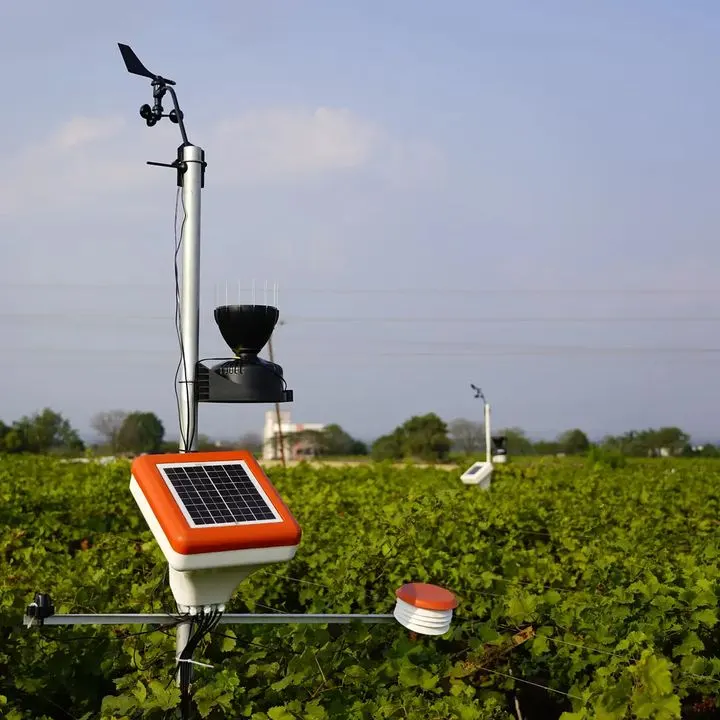
What we measure
Fifteen readings, from the roots to the leaves.
Every reading answers a real question on the farm, from when to water to when to spray.
Soil
Soil moisture, root zone
How much water the roots can reach at this moment.
Soil moisture, below root zone
Whether irrigation water is draining past the roots.
Soil conductivity, root zone
Salt and fertiliser levels where the roots feed.
Soil conductivity, below root zone
Whether salts are building up or being flushed out.
Soil temperature
Shapes sowing dates, root growth and nutrient uptake.
Canopy
Leaf wetness
The main driver of fungal disease, so sprays go on at the right moment.
Canopy temperature
Picks up heat stress in the plants themselves, early.
Canopy humidity
The air around the leaves, which sets how quickly disease spreads.
Weather
Air temperature
The temperature in your own field, not the nearest town.
Air humidity
A key input for forecasting pest and disease pressure.
Rainfall
Measured on your plot, so you can skip irrigation you do not need.
Wind speed
Shows when a spray will drift or lose strength.
Wind direction
Shows where drift and spores are carried.
Solar radiation
How much light the crop is actually receiving.
Barometric pressure
An early signal that the weather is about to change.
The sensors
Sensors we make, install and maintain.
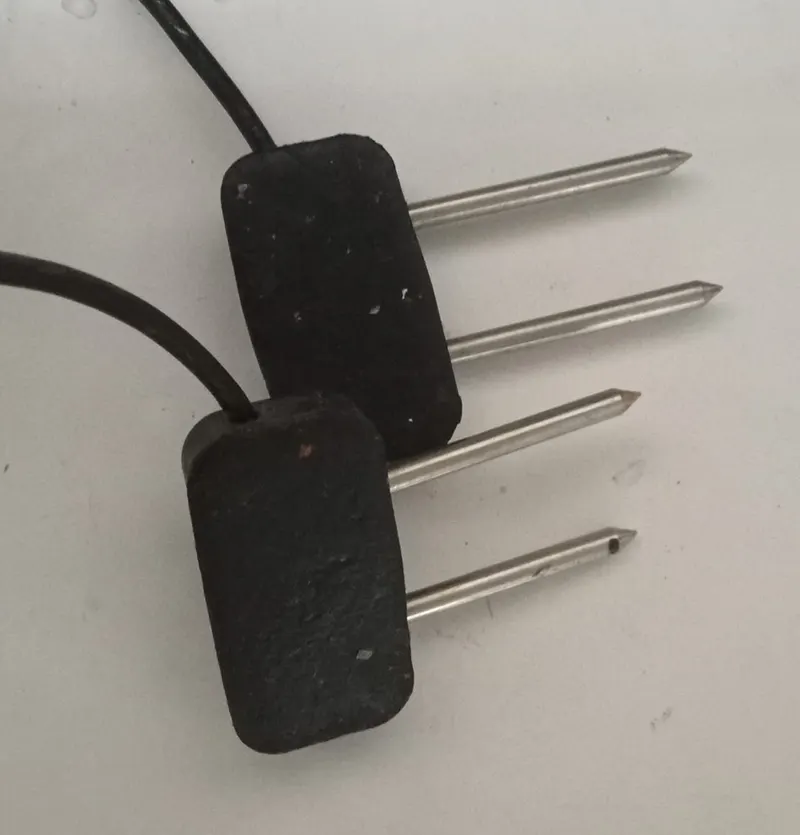
Soil sensor
Our multi-frequency electrical probe reads moisture and conductivity at two depths: one inside the root zone and one beneath it.
Read side by side, they show how far each irrigation reaches and whether water is going to waste.
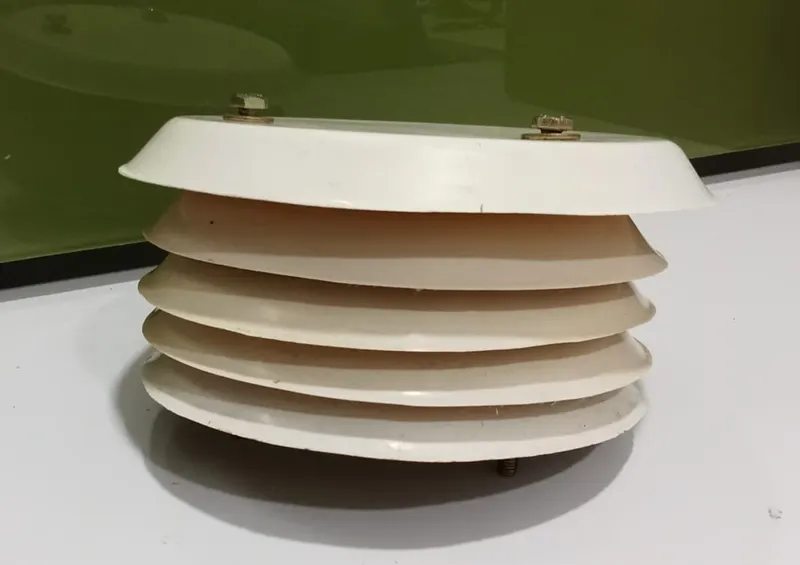
Microclimate: canopy and air
Leaf wetness, canopy temperature and humidity, plus air temperature and humidity, are all measured among the plants.
Each sensor sits in a shield, so direct sun and rain cannot distort its readings.
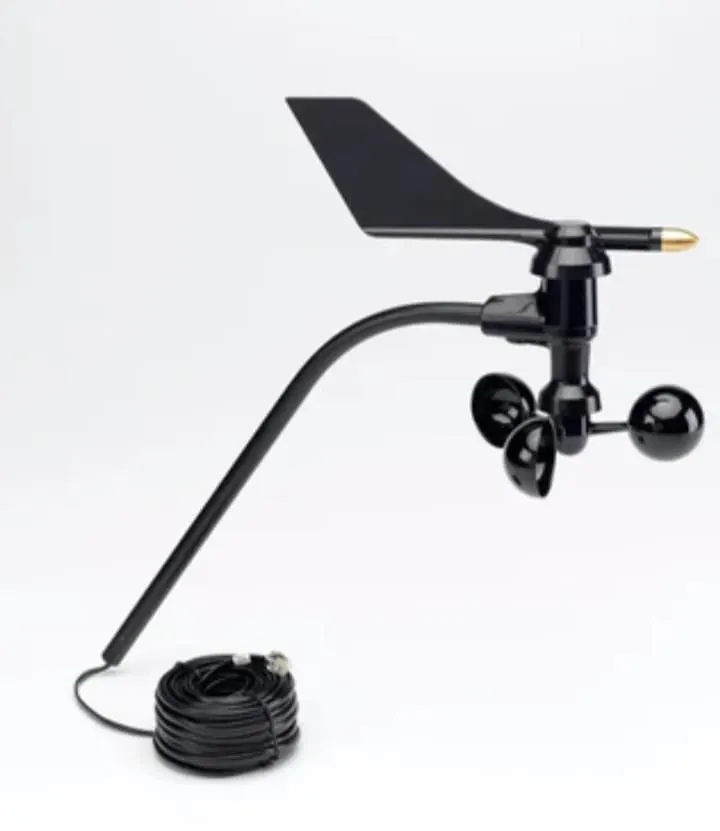
Rain and wind
A rain gauge logs every shower on your plot, and a wind sensor reports speed and direction.
That means you can time sprays around the wind and know exactly how much rain fell.
Hardware
Made to live outdoors.
| Power | Solar panel, with a battery for backup |
|---|---|
| Connectivity | 4G and LoRaWAN |
| Enclosure | Heat-resistant and modular, so parts swap out easily |
| Installation | Handled by the Qtonet team |
| Maintenance | Handled by the Qtonet team |
| Data frequency | Readings logged at regular intervals configured for each station |
After installation
Tuned first, then watched.
Tuned to your field
Each station gets its own calibration for its soil and location, so the readings describe your field rather than an average one.
Watched day and night
When a station drops offline or its battery runs low, our team is notified and follows it up.
Put a station in your field.
Share your crop and location with us and we will plan the installation together.